Goal
Measure how customers perceive their interaction with the company at every step along their shopping journey to help identify improvement opportunities and inform product prioritization.
Role
Project initiator and lead
Timeline
The framework’s activation and placement of all intercept surveys took almost a year to complete.
Approach
Working alongside my team, we developed a robust framework that integrated descriptive (analytics), perception, and business outcome metrics to measure customer experience quality.
We implemented this framework by measuring experience quality across various dimensions, such as awareness, engagement, efficiency, satisfaction, and trust. We then identified and prioritized key tasks along the customer’s shopping journey and worked with the Voice of the Customer team and the development team to implement tags that trigger contextual micro-surveys across all digital channels, including our native app.
To ensure the feedback was statistically significant and prevent customers from being overwhelmed with multiple surveys, we created a sophisticated sampling mechanism.
Leveraging the initial survey results, we established a comprehensive baseline that served as a benchmark for all subsequent rounds, enabling us to identify potential behavioral or attitudinal deviations. The product owners then used this information to inform investment areas and backlog prioritization.
Deliverables
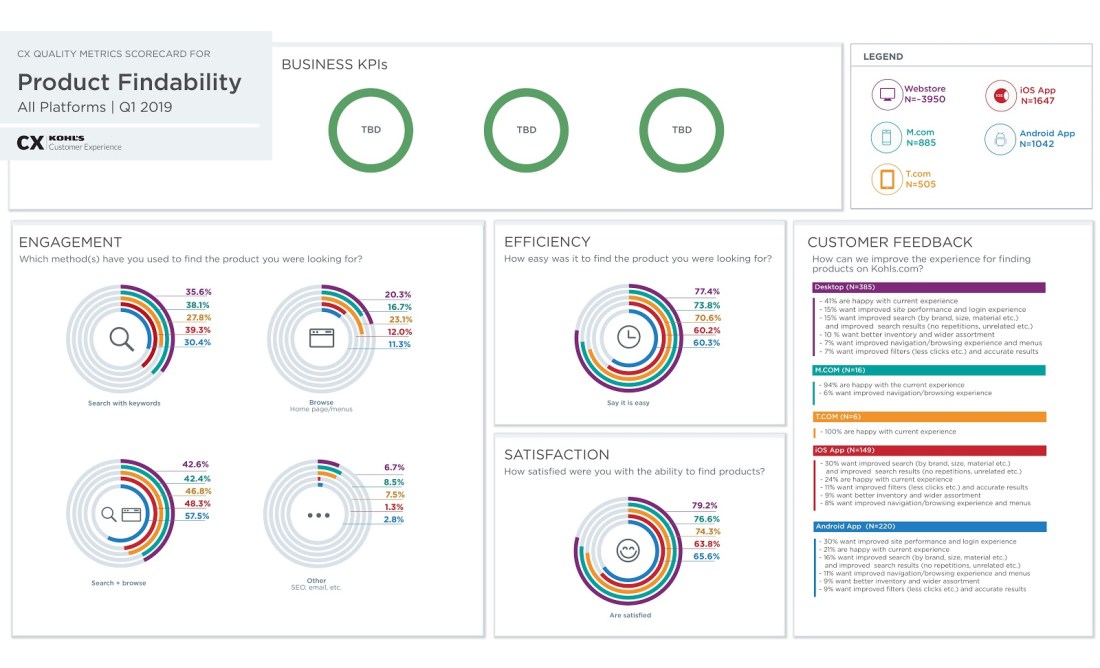
As part of this effort, we developed an experience quality measurement framework, which enabled us to assess the user experience across various digital channels. In addition, we created scorecards for each task, allowing us to systematically compare user feedback across digital channels and evaluate performance metrics.


 ANDREAS WOELK